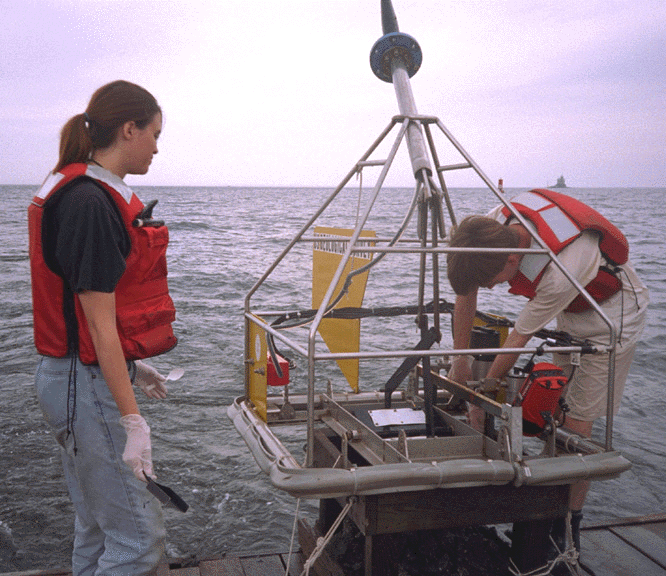
Long Island Sound is a semi-enclosed estuary. It is enclosed by Long Island to the South and Connecticut to the North. Sediment input into the Sound is mainly a result of four major rivers flowing in from Connecticut, although many smaller tributaries also add their sediment contributions. As a result of river inflow, many saltmarshes are found along the North shore of Long Island Sound. These saltmarshes have proven to give excellent records of metal pollution over the last centuries. Metals are absorbed to the sediments and get buried by younger sediments. Dated core samples from these marshes thus provide valuable information about the use of metals over time.
We have taken core samples in several marshes along the North coast of Long Island Sound. The cores were dated (210Pb and 14C) and sliced into 2.5 cm intervals. Mercury content was determined for all slices by cold vapor atomic absorption spectrometry on leachates from the samples. In addition two cores were taken from marshes at 500 feet height. These marshes only have atmospheric mercury input, in contrast with the saltmarshes where focussing of transported sediment occurs.